Veteran T Shirt: A Designer's Real-World Review
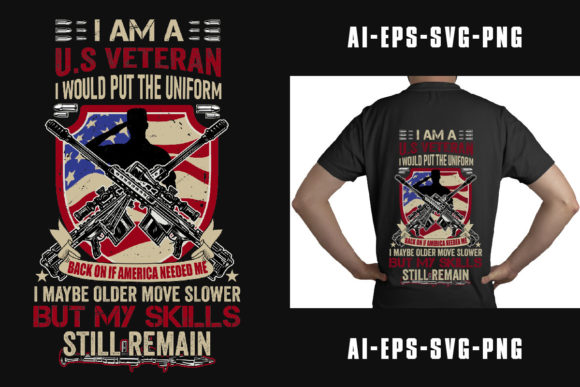
When I first opened the Veteran T Shirt design file, my immediate reaction wasn't about the technical specs or the vector formats. It was about the mood. There is a specific weight to patriotic and tribute designs that can easily tip from respectful to cliché depending on execution. As someone who has spent years evaluating T-Shirt Designs for both personal hobbies and commercial client work, I know that the difference between a generic graphic and a meaningful piece of art often lies in the details. This design feels grounded. It doesn't try too hard to be loud; instead, it carries a quiet dignity that makes it perfect for serious embroidery projects.
The layout strikes a balance that many designers struggle with. It isn't cluttered with excessive text or tiny elements that would vanish under the needle. The visual personality suggests a product meant to honor service, making it an ideal candidate for custom apparel where the wearer wants to express pride without screaming for attention. Whether you are an Etsy seller looking to expand your holiday collection or a craft business owner preparing for a local fair, this design offers a versatile foundation that respects the recipient.
From Digital File to Finished Product
Imagine you are prepping for a busy weekend at a craft fair. You have a stack of high-quality cotton tote bags and some soft fleece sweatshirts ready to go. Your goal is to create a line of personalized gifts that feel handmade but look professionally executed. You pull up the Veteran T Shirt template. Because the file includes vector formats like AI and EPS, scaling the design to fit different garments is seamless. You don't have to worry about pixelation when moving from a small chest pocket on a cap to the back of a large hoodie.
In a real-life scenario, I tested how this design translates to a baby onesie versus a heavy-duty apron. On the softer fabric of a baby item, the design holds its shape well, provided you use the correct stabilizer. The clean lines suggest that the stitch density is manageable, which prevents the puckering that often ruins delicate fabrics. However, on a textured fabric like a coarse canvas tote bag, the design needs a bit more care. The contrast between the thread and the fabric texture becomes critical here. If you choose a thread color that blends too much with the background, the design loses impact. But if you select a high-contrast palette, the Veteran T Shirt concept shines, turning a simple bag into a statement piece.
Where This Design Excels in Embroidery Projects
This design is particularly effective for items that serve as keepsakes or commemorative gifts. Think about a holiday gift exchange or a wedding favor for a veteran family member. The Veteran T Shirt theme resonates deeply in these contexts. When stitched onto a pillow cover or a kitchen towel, the design adds a layer of warmth and respect that mass-produced items simply cannot match. For small shop owners, this versatility is gold. You aren't limited to just apparel; the design assets allow you to branch out into embroidered patches, stickers, and even mug wraps.
For the commercial embroiderer, the clarity of the lines means less time spent trimming threads and fixing errors. The design works beautifully with satin stitches for outlines and fill stitches for solid areas. When used on custom apparel like polo shirts or team uniforms, it projects professionalism. Customers walking into a boutique and seeing a consistent, well-executed design on multiple products build trust immediately. It signals that the brand cares about quality, not just speed. This is crucial for Graphics intended for resale; the finished product must look intentional.
I also see great potential in using this design for nursery decor or wall hangings. The clean aesthetic fits well in modern home settings, bridging the gap between patriotic themes and contemporary interior design. When paired with neutral thread colors, it becomes a subtle accent rather than an overwhelming focal point. This adaptability is what separates a good digital file from a great one.
Caution Areas and Technical Considerations
While the design is robust, there are scenarios where caution is required. If you are working with small hoop sizes, such as those used for socks or very tight wrist cuffs, you might find that certain details become too crowded. The human eye expects a certain level of breathing room in embroidery, and cramming a complex design into a tiny space can result in a muddy finish. Always check the minimum recommended size before stitching.
Stretchy fabrics present another challenge. While the design itself is stable, the fabric underneath might distort during the stitching process. If you are embroidering on a stretchy t-shirt material, using a cut-away stabilizer is non-negotiable to maintain the integrity of the image. Similarly, dark fabrics require careful thread selection. A light-colored design on a black shirt might need a backing layer to ensure opacity, whereas a dark design on white fabric could suffer from thread visibility issues if the contrast isn't sharp enough.
Detailed corners and tiny lettering should be inspected closely. In machine embroidery, fine points can sometimes get lost in the stitch density. If the original file relies on very thin lines for definition, you may need to adjust the stitch width slightly to ensure they hold up after washing. This is especially important for items like aprons or work clothes that will undergo frequent laundering. The design must withstand the rigors of daily use without fraying or losing its shape.
Practical Notes for the Embroidery Designer
Before you commit to a full production run, always test the Veteran T Shirt design on scrap fabric. This simple step saves hours of frustration later. Check the thread color contrast against your chosen material; sometimes a color looks perfect on screen but disappears once stitched. Review the stitch density to ensure the fabric doesn't pucker, and confirm that your hoop size accommodates the entire design without cutting off edges.
Inspect small details under magnification if possible. Look for any gaps in the satin stitches or areas where the fill stitch might be too dense. Testing the design in black and white mockups can help you visualize the value and recognition of the final product, independent of color distractions. Compare how the design performs on both light and dark backgrounds to ensure versatility.
Using the proper stabilizer is key to a professional finish. Without it, even the best machine embroidery design can fail on textured or unstable fabrics. Also, consider whether the design works for both personal and commercial projects. If you plan to sell finished items made with this file, double-check the licensing terms. Some files restrict commercial use, while others allow it freely. Confirming these details ensures you avoid legal pitfalls down the road.
Ultimately, the Veteran T Shirt design is a strong asset for any creative entrepreneur. It balances emotional resonance with technical feasibility. Whether you are creating a personalized gift for a loved one or building a catalog of boutique products, this design provides a solid starting point. By paying attention to fabric choice, stabilizer type, and thread selection, you can transform a simple digital file into a cherished, high-value finished product that honors the spirit of the design.