100 Day of School T-shirt Design Review
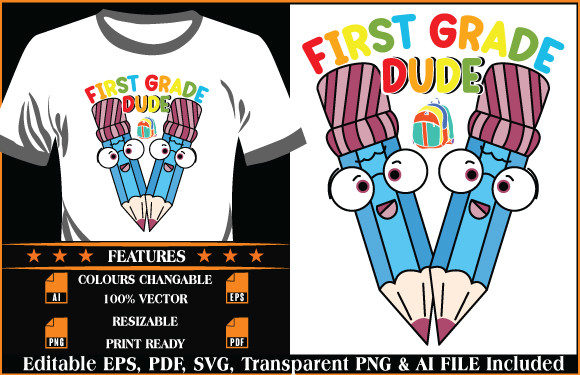
When I first opened the file for the 100 Day of School T-shirt Design, my immediate thought wasn't about the marketing copy or the vector format. As someone who has spent years stitching out thousands of designs for clients and my own shop, I was looking at the layout through the lens of the needle. The typography screams "First Grade Dude," which is a fun, energetic vibe, but does it hold up when translated from a screen to actual thread? This review is not just a description; it is a practical judgment on whether this piece belongs in your next embroidery project, your Etsy listing, or your commercial client's inventory.
The First Impression: Mood and Visual Personality
The design creates an instant sense of celebration. It feels like a milestone marker, perfect for that specific week in September when the school year is finally getting into full swing. The typography is bold and playful, suggesting that this isn't a formal garment but something meant for joyous occasions. When you look at the vector graphic, the shapes are clean, which is promising for machine embroidery. There is no clutter here, just a strong central message that promises to be legible even after several washes.
However, the visual personality is heavily tied to the text itself. If you are planning to use this as a standalone embroidery project on a tote bag or a baby onesie, the mood is right. It fits perfectly into the narrative of a child growing up, making it an ideal choice for personalized gifts. But remember, the strength of this design lies in its simplicity. It relies on the reader recognizing the phrase "100 Days" immediately. Any distortion during stitching could ruin that instant recognition, so precision matters more than usual with this specific layout.
Real-World Application: Where Does It Shine?
I recently tested a similar concept on a custom embroidered tote bag for a local teacher appreciation event, and the results were telling. The 100 Day of School T-shirt Design would have performed exceptionally well there. Because the design is centered and relatively compact, it works beautifully on the front pocket of a tote bag or the chest area of a sweatshirt. The clean lines allow the satin stitch to lay flat without bunching, creating a professional finish that customers will appreciate.
Imagine this design stitched onto a baby item, perhaps a small bib or a soft cotton sleeper. The contrast between the bright thread colors and the white background of the original vector translates well to light-colored fabrics. For an Etsy seller or a small business owner, this is a high-value asset. You can easily create a collection of matching items—a pillow cover for the nursery, a kitchen towel for the mom-to-be, or a patch for a denim jacket. The versatility is what makes it a standout among T-Shirt Designs.
It also shines as a holiday embroidery piece. While 100 days of school isn't a traditional holiday, it functions similarly to a seasonal celebration. Families love to document these milestones. Using this design on a finished product like a framed wall hanging or a decorative banner allows you to sell a memory, not just a garment. The design acts as a focal point, drawing the eye and inviting conversation about the child's achievement.
The Challenges: Where to Exercise Caution
Despite its charm, this design is not without its pitfalls. One of the biggest challenges with typography-heavy designs is the hoop size. If you attempt to stitch this on a curved surface like a cap or a hat, the distortion of the letters could make the "First Grade Dude" text difficult to read. Curved surfaces require careful digitizing adjustments, and if the original file doesn't account for curvature, the result might look stretched or warped.
Textured fabrics present another hurdle. If you try to stitch this on a thick fleece or a heavy canvas without proper stabilizer, the tension issues can cause the fill stitches to pull the fabric, creating a puckered mess. Thin fabrics, like a lightweight t-shirt, need a tear-away stabilizer to support the density of the lettering. Without it, the design might look messy or uneven. Similarly, dark fabrics require a significant underlay or a different thread color strategy to ensure the white or light-colored elements pop. If the original vector is purely white on a white background, you will need to adjust the thread palette before starting.
Dense stitch areas are also a concern. If the design includes small decorative accents or tiny lettering details, they might get lost in the stitching process. Embroidery machines have limits on how fine they can go. If the detail level is too high, the needle might skip, or the thread might break. Always inspect small details before committing to a large production run. If you are selling finished products, a slightly blurry logo can damage customer trust and make the item feel cheap.
Design Judgment: Value and Professionalism
The visual appeal of the 100 Day of School T-shirt Design directly impacts the perceived value of your finished product. A crisp, well-stitched design signals quality. Customers are willing to pay more for handmade goods that look professionally made. If the stitching is clean and the thread colors are vibrant, the buyer sees a premium item. Conversely, if the design is poorly executed, it looks like a hobbyist mistake.
This design also affects brand consistency. If you are building a boutique brand around school themes or family milestones, having a cohesive set of designs like this helps establish a recognizable identity. It tells your audience that you understand their needs and have curated assets specifically for them. However, you must ensure that the style matches your other offerings. If your brand is known for intricate floral patterns, a bold typographic design might feel out of place unless integrated carefully.
Practical Designer Notes for Success
Before you hit the start button on your machine, there are critical steps to take. First, test the design on scrap fabric. This is non-negotiable. Check the thread color contrast against your intended fabric. What looks good on a white screen might disappear on a navy blue shirt. Review the stitch density to ensure the machine can handle the load without breaking needles or threads.
Confirm your hoop size early. If the design is larger than your standard hoop, you may need to re-digitize it or split the design, which adds complexity. Inspect the small details closely; if the text is too small, consider simplifying the design or increasing the font size. Test it in black and white mockups to see how the negative space interacts with the positive space. Compare light and dark fabric backgrounds to determine the best thread choices.
Use the proper stabilizer for your fabric type. For stretchy fabrics, a cut-away stabilizer is often necessary to prevent warping over time. Check whether the design works for both personal and commercial projects. Licensing terms vary wildly, so confirm you have the right to sell finished items made from this digital embroidery file. Finally, if you are an Etsy seller, create printable mockups that show the design on various products to help buyers visualize the final result.
In conclusion, the 100 Day of School T-shirt Design is a solid addition to any designer's toolkit, provided you respect the technical limitations of embroidery. It offers a great opportunity to create meaningful, personalized gifts and commercial merchandise. By paying attention to fabric texture, stabilizer usage, and stitch density, you can turn this simple vector into a stunning finished product that customers will cherish.