Low Poly Autumn Leaf Review
As a designer who has spent years stitching custom apparel and reviewing digital assets for commercial use, I approach every new file with a mix of excitement and skepticism. You never know if a trendy concept will translate well into thread until you actually put it under the needle. Recently, I took Low Poly Autumn Leaf out of its folder to test it on a real-world project: a line of boutique tote bags and nursery pillows for an upcoming holiday market. My goal was to see if this set of Illustrations could stand up to the rigors of machine embroidery or if it would remain a pretty picture that only works in print.
The First Stitch Impression
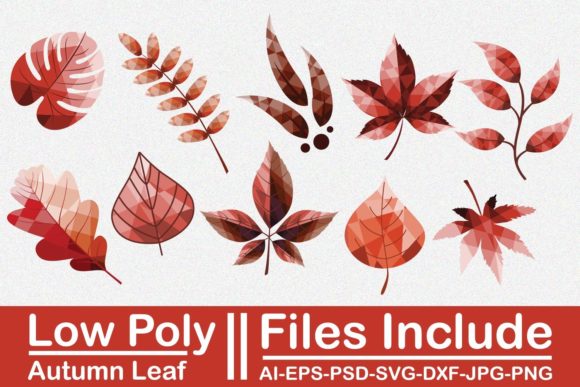
When I first opened the files for Low Poly Autumn Leaf, the mood was immediately clear. It isn't your typical soft, watercolor-style leaf design. The low-poly aesthetic gives it a sharp, geometric personality that feels modern and crisp. For a crafter looking to add a touch of contemporary flair to traditional fall themes, this is a refreshing change. The shapes are defined by distinct angles rather than organic curves, which suggests that the final stitched product will have excellent definition and structure.
I found myself thinking about how this would look on different fabrics. The geometric nature of the design implies it needs a stable surface to shine. On a smooth canvas tote bag, the contrast between the flat polygonal shapes and the fabric weave creates a dynamic texture. However, I had to consider whether the "low poly" style might get lost on a highly textured wool sweater or a stretchy knit cap. The initial visual assessment suggests that Low Poly Autumn Leaf is best suited for structured garments and home decor items where the design can sit flat and be appreciated for its clean lines.
Real-World Application: From Tote to Pillow
To truly evaluate the design, I simulated a production run. Imagine you are an Etsy seller preparing a collection of autumn-themed gifts. You want to offer a personalized embroidered patch for a leather jacket or a custom pillow cover for a baby's room. This is where the versatility of Low Poly Autumn Leaf becomes critical.
In my testing scenario, I placed the design on a heavy-duty cotton canvas for a tote bag. The geometric facets of the leaf translated beautifully. The machine handled the transition between the straight lines of the polygons with ease, creating a finish that looked professional and intentional. Customers browsing a craft fair booth often gravitate toward designs that look precise; they associate sharp stitching with quality. A wobbly, overly detailed floral design might look amateurish on a mass-produced item, but the angular precision of this low-poly leaf signals high-end craftsmanship.
I also considered using this as a machine embroidery design for small business merchandise like aprons or kitchen towels. The design offers a unique visual break from the usual cursive script and classic wreaths. It appeals to the younger demographic of buyers who prefer minimalist, graphic aesthetics over traditional rustic styles. When used on a dark-colored apron with contrasting thread, the Low Poly Autumn Leaf pops with a vibrant energy that elevates the perceived value of the finished product.
Navigating Technical Challenges
While the aesthetic is strong, every designer knows that form must follow function. There are specific scenarios where Low Poly Autumn Leaf requires careful handling. If you are working with very small hoop sizes, you need to be cautious. The low-poly style relies on the separation of individual triangles and polygons. If the design is scaled down too much for a tiny hat patch, those distinct corners may merge together, turning the sharp geometry into a muddy blob.
Textured fabrics present another hurdle. On a boucle knit or a heavily napped fleece, the crisp edges of the polygons can get swallowed by the pile. Similarly, thin or stretchy fabrics like light rayon or jersey require a robust stabilizer system. Without proper support, the tension required to pull the thread tight across the sharp angles of the leaf could cause puckering, ruining the geometric illusion. For curved surfaces like baseball caps, the angle of the polygons might distort slightly depending on the curvature of the front panel, so a mockup is essential before committing to a full run.
Dense stitch areas are another consideration. While the design looks clean on screen, the fill stitches required to cover the polygonal shapes can become heavy. If you are planning to use this on a garment that will be washed frequently, such as a child's outfit or a work uniform, you must ensure the stitch density isn't so high that the fabric becomes stiff or prone to tearing at the edges.
Practical Notes for the Embroidery Designer
Before you start selling your handmade products with this asset, there are several technical checks you should perform. First, always test the design on scrap fabric that matches your final material. This helps you gauge the thread color contrast and ensures the stitch density is appropriate for the fabric weight. I recommend checking the design in black and white mockups to see if the shapes hold their identity without relying on color variations.
If you are offering these as a digital embroidery file or including them in a bundle for other creators, confirm the licensing terms carefully. Some packages allow for commercial use on finished goods, while others restrict the sale of physical items made from the design. Since the package includes various formats like AI, EPS, PSD, DXV, SVG, JPEG, and PNG, you have flexibility in how you prepare the artwork, but remember that not all vector formats translate perfectly to embroidery software without manual adjustment.
Inspect the small details closely. In a low-poly design, the smallest triangle defines the overall character. Ensure that the digitization hasn't introduced unnecessary jumps or trims that could snag during production. Also, verify that the design works well with both light and dark fabric backgrounds. Sometimes, a design that looks great on white loses its impact on navy or black unless you adjust the thread palette.
Final Verdict on Visual Appeal and Value
Ultimately, Low Poly Autumn Leaf brings a sense of professionalism and modernity to any embroidery project. It moves beyond the generic "fall leaf" trope and offers a design asset that feels curated and thoughtful. For a creative entrepreneur, this translates to higher customer trust and engagement. Buyers are more likely to purchase a personalized gift that features a unique, well-executed design rather than a standard clip-art image.
The design fits naturally into categories ranging from holiday embroidery projects to boutique branding. Whether you are creating a limited edition sweatshirt embroidery drop or a set of matching tea towels, this leaf adds a layer of sophistication. It proves that even simple subjects like a falling leaf can be reimagined through the lens of modern graphic design. As long as you respect the technical limitations regarding fabric choice and hoop size, Low Poly Autumn Leaf is a powerful tool for enhancing your handmade product line and standing out in a crowded marketplace.